Why do custom white toys turn yellow over time? The answer usually begins with chemistry, not poor cleaning. White toys often contain polymers, pigments, plasticizers, and surface coatings. Sunlight, heat, oxygen, skin oils, and airborne pollutants can slowly change these materials. Ultraviolet light may break polymer bonds and create yellow-colored oxidation products. Warm storage can accelerate the process. A toy left beside a sunny window may show yellowing sooner than one kept in a cool cabinet.
Dr. George Wypych, a recognized researcher in polymer degradation, explains, “Oxidation is one of the main causes of polymer degradation.” This principle helps explain why wiping alone may not restore an aged toy’s original color. The yellow layer can form within the material, not only on its surface. That distinction matters.
This guide explores seven practical tips for slowing discoloration and identifying its likely cause. We will examine storage temperature, ultraviolet exposure, packaging materials, cleaning habits, and production choices. Small details matter. A clear plastic bag can trap heat. A harsh cleaner can dull a soft coating. Even repeated handling may leave oils that react with light.
Some explanations remain product-specific. The exact formula is often unavailable. That uncertainty deserves honesty. A toy may yellow from several causes at once, and one method will not fix every case. The goal is not to promise perfect whitening. It is to protect the material, reduce future damage, and make better care decisions based on evidence and observation.
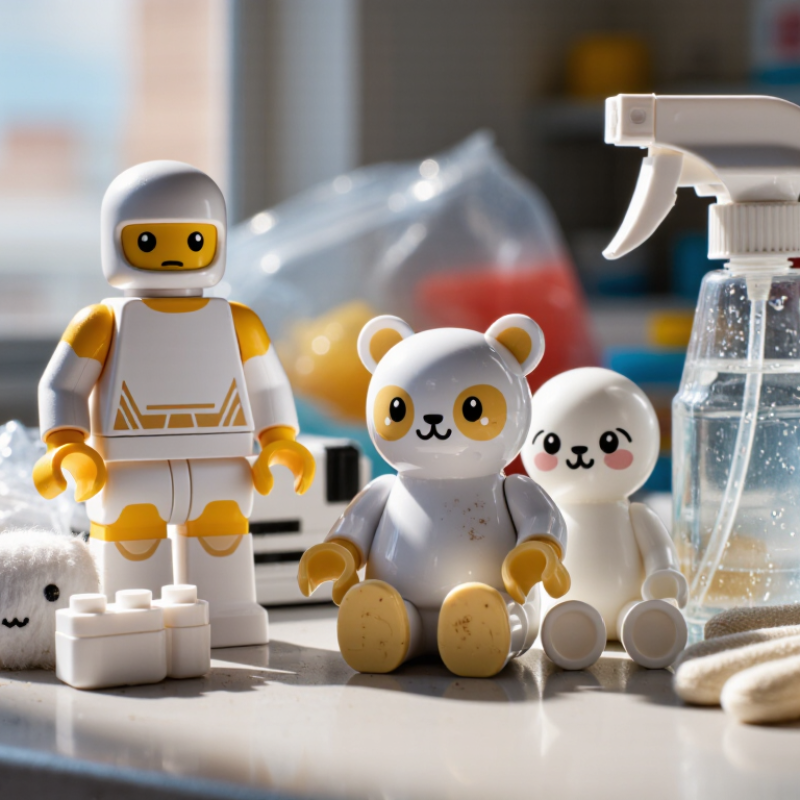
Custom white toys can turn yellow because their plastic slowly changes at the molecular level.
Ultraviolet light is a major cause. Sunlight breaks down polymers and weakens whitening additives. Heat speeds up this process, especially near windows, radiators, or warm storage rooms. Oxygen also contributes through oxidation.
The surface may become cream-colored, brittle, or slightly sticky.
Skin oils, cooking smoke, dust, and colored fabrics can leave additional stains. Some strong cleaners cause discoloration rather than removing it.
I once blamed dust for a yellow patch, but the toy had actually sat under direct sunlight for months. That mistake showed me why the storage history matters.
Seven practical habits can slow yellowing.
Keep toys away from direct sunlight, and use a UV-filtering display case when possible.
Store them in a cool, dry room with stable temperatures.
Handle white surfaces with clean, dry hands.
Wipe them gently with a soft cloth and diluted mild soap.
Avoid bleach, abrasive powders, alcohol-heavy solutions, and unknown solvents.
Let the surface dry completely before placing the toy in storage.
Check the toy every few months for heat marks, sticky areas, or uneven color.
Do not assume every yellow stain can be reversed. Plastic aging may be permanent.
A cleaning test on a hidden area is safer than treating the entire piece immediately.
Even careful storage cannot stop aging completely, and that limitation deserves honest attention.
Oxygen and ultraviolet light can break chemical bonds in plastic. Heat accelerates this oxidation. Yellow-brown compounds may then form inside or on the surface. It happens slowly.
Yes. A sunny window often yellows exposed edges and thin joints first. The underside may remain whiter. Compare both areas under the same lighting.
Heat speeds chemical reactions involving oxygen and light. Avoid radiators, hot lamps, attics, garages, and car dashboards. A stable room below 25°C is better when possible.
Humidity may encourage surface reactions when dust, fingerprints, or residue remain. Air also supports oxidation. Use a clean, closed container, but avoid trapped heat and moisture.
No. Silicone may absorb stains, while rigid resin can yellow internally. Pigments, coatings, plasticizers, and curing compounds also influence aging. Material records help, but they may be incomplete.
Gently clean a hidden area with mild soap and a soft cloth. If the color remains, deeper oxidation may exist. An unexposed underside offers useful evidence. Visual judgment can mislead.
Keep them away from direct sunlight and strong heat. Use clean, dry hands or cotton gloves. Leave small air gaps around stored pieces. Avoid damp, crowded storage.
Avoid strong solvents, abrasive powders, and untested whitening products. Never mix unknown cleaners. Test any cleaner on a concealed area first. Whitening may damage coatings.
Photograph the toy every few months under consistent lighting. Record temperature, storage location, and visible changes. A pale edge can suggest light exposure. Still, my own first assumption about heat was wrong once; the real issue was afternoon ultraviolet exposure.
Why do custom white toys turn yellow over time? The main causes are material aging, oxidation, and chemical reactions within plastics, coatings, adhesives, or soft vinyl. When these materials interact with oxygen, heat, humidity, and sunlight, their original white color can gradually change to cream or yellow. Long-term exposure to air, smoke, dust, skin oils, and nearby colored materials may also speed up discoloration, especially when toys are stored in warm or damp places.
To help prevent yellowing, keep white custom toys away from direct sunlight, high temperatures, moisture, and strong chemicals. Store them in a cool, dry, well-ventilated area, use clean protective wrapping, handle them with clean hands, and regularly remove dust. Avoid mixing them with dark or unstable materials during storage. For yellowed surfaces, gently clean with mild soap and water, test any treatment on a hidden area first, and avoid abrasive tools or harsh cleaners that may damage the finish. Full restoration may not be possible if the discoloration has affected the material itself.

 Kasten Toys