Why Does a Custom Plush Toy Take So Long to Ship?

Time:2026-09-09 Author:Oliver
0%

Ordering a custom plush toy looks simple until the design enters production. A sketch must become a workable pattern, with accurate proportions, safe seams, and suitable fabric. The factory may also need to create a sample before approving the final version. Small changes can add several days, especially when embroidery, printed details, or unusual shapes are involved.

How long does a custom plush toy usually take to ship? In many cases, the complete process takes four to twelve weeks. This estimate often includes design confirmation, sampling, manufacturing, quality inspection, and delivery. Shipping itself may take only a few days domestically, but international transport can require more time. Customs checks, weather, carrier delays, and peak-season demand can change the schedule. A careful supplier should provide separate timelines for production and transit. Ask for both in writing.

From practical manufacturing experience, the sample stage causes many unexpected delays. A smile may look correct on screen but appear uneven when stitched. Fabric colors can also change under different lighting. Reliable manufacturers usually send photos, measurements, or physical samples before mass production. Still, no timeline is perfect. Even an experienced team can underestimate revisions or material shortages. That uncertainty deserves honest discussion, not a confident promise. Checking reviews, requesting a production schedule, and confirming the approval process can make the waiting period more manageable. A beautiful plush toy takes time because each detail must survive several real-world checks.
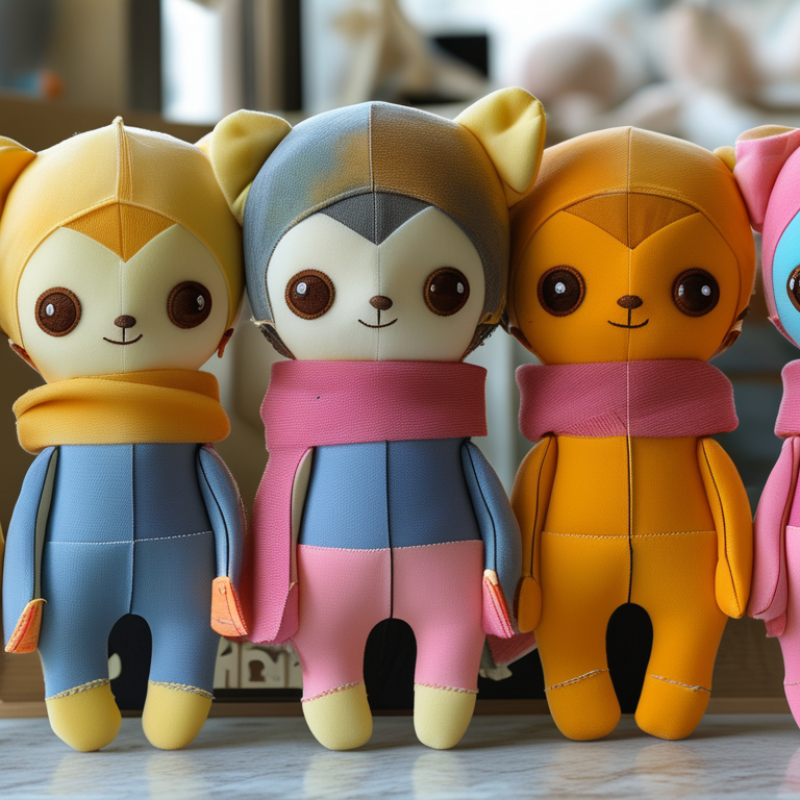
Why Does a Custom Plush Toy Take So Long to Ship?

How Custom Plush Toy Orders Are Processed

A custom plush toy rarely ships immediately because production involves several controlled steps.

The process usually begins with a design brief, measurements, fabric choices, and artwork approval. A production specialist then checks whether the shape can be sewn safely and accurately.

Small features matter.

Embroidered eyes, curved ears, and tiny clothing pieces may require separate testing.

After approval, the maker creates a sample, often by hand. This stage can expose practical problems, such as uneven stuffing or a face that looks different from the drawing.

Changes may require a new pattern or sample. I have seen a simple size adjustment delay production because it affected seams, fabric use, and packaging. That delay feels frustrating, but skipping the check can create larger quality issues.

Once the sample is accepted, workers cut fabric, sew panels, add filling, and attach details. Each item then needs inspection for loose threads, uneven stitching, stains, and incorrect measurements. Only approved pieces move to packing and shipment.

Tips:

Send clear artwork, exact dimensions, and fabric preferences with your inquiry. Approve samples quickly, but inspect them carefully.

Ask for a realistic production timeline, including sampling, manufacturing, quality checks, and transit.

Weather, material availability, and busy production periods can still change delivery dates. Build in extra time. It is not always convenient.

Why Design Approval Can Delay Production

A custom plush toy often ships late because design approval takes longer than expected. The factory cannot begin cutting fabric until the artwork, measurements, and construction details are confirmed. A small change to an ear shape can affect the pattern, stitching, stuffing, and final balance.

In production work, I have seen approvals pause over one thread color. A digital image may show soft blue, while the physical sample appears gray under indoor light. Size also causes confusion. A requested 20-centimeter toy may become 22 centimeters after adding ears and feet. Small changes matter. Each revision may require a new drawing, sample adjustment, or quality check.

Clear feedback helps reduce these delays. Mark changes directly on the sample photos, and confirm colors with physical references when possible. Approve the face, fabric, embroidery, and accessories separately. Keep one final specification sheet for everyone involved.

Email discussions can become unclear, especially when several versions have similar file names. I once approved a sample too quickly and missed a slight eye-position difference. That mistake required another correction.

A rushed approval can create a longer delay than a careful review. Production should begin only after the final design is confirmed in writing.

How Materials and Handcrafted Details Affect Manufacturing Time

A custom plush toy rarely ships as soon as the artwork is approved. Materials create the first delay. Textile Exchange’s 2024 Materials Market Report records 124 million tonnes of global fiber production in 2023. Polyester represented about 57 percent. That matters because pile height, stretch, recycled content, and colorfastness change cutting and sewing behavior. Dense minky fabric may require slower cutting. Loose fibers can affect embroidered eyes. Small changes matter.

Makers usually test a sample before production. They check seam strength, stuffing recovery, facial alignment, and wash performance. ISO 8124-1:2018 addresses mechanical and physical safety risks for toys, including accessible components and seams. Meeting these requirements may require extra inspections, material documents, or a revised sample. Handcrafted details add more hours. One embroidered face may need several thread passes. A hand-stitched mouth must be positioned carefully. Limited runs also lack factory efficiency. Ten pieces do not move like ten thousand.

The slowest stage is often correction, not sewing. If the ears sit unevenly, the maker may open the seam, adjust filling, and repeat inspection. Experienced teams estimate this, but not perfectly. Humidity can alter fabric handling, and stuffing density varies by operator. A little inconsistency remains. A realistic lead time should include sampling, pressing, inspection, and packing. Otherwise, “ready to ship” may only mean “ready to start checking.”

Why Does a Custom Plush Toy Take So Long to Ship?

How Materials and Handcrafted Details Affect Manufacturing Time

Manufacturing Stage Main Time Driver Typical Time Why It Takes Time Ways to Reduce Delays
Artwork Review & Pattern Development Design complexity 2–7 business days Two-dimensional artwork must be converted into a three-dimensional sewing pattern. Unusual shapes, asymmetry, and small accessories require additional pattern adjustments. Supply clear reference images, exact dimensions, color references, and views from multiple angles.
Material Sourcing Fabric and component availability 3–15 business days Plush fabric, thread, filling, safety eyes, embroidered details, and specialty trims may need to be matched, ordered, or tested before production. Choose standard fabric colors and confirm approved materials before sampling begins.
Prototype Construction Number of pattern pieces 5–12 business days The first sample tests proportions, seam placement, stuffing density, balance, and the appearance of the finished shape. Approve the pattern direction early and group feedback into one revision round.
Embroidery & Facial Features Stitch count and placement accuracy 2–6 business days Embroidered eyes, mouths, logos, or markings require digitizing, test stitching, trimming, and alignment checks on curved surfaces. Use simplified artwork and provide final placement measurements.
Hand-Sewn Details & Accessories Manual labor per unit 1–5 business days Items such as felt pieces, clothing, appliqué, miniature accessories, and hand-stitched features cannot be completed as quickly as basic machine sewing. Limit the number of individually attached details or use pre-approved standard components.
Sampling & Revisions Number of correction cycles 3–10 business days Changes to size, color, shape, embroidery, or stuffing may require a revised sample rather than a simple adjustment to the production line. Use a detailed approval checklist covering measurements, colors, materials, and finishing.
Bulk Cutting & Sewing Order quantity and construction method 7–25 business days Each unit requires cutting, joining, turning, stuffing, closing, and inspection. Small orders may not support a continuous production workflow. Finalize quantities and specifications before cutting starts.
Quality Inspection & Rework Defect rate and inspection standard 2–7 business days Units are checked for loose threads, uneven stuffing, seam problems, misplaced features, color variation, and attachment security. Defective units may need rework. Define measurable acceptance standards and inspect an approved reference sample.
Packaging Preparation Individual packaging requirements 1–4 business days Tags, protective bags, inserts, folding, labeling, and carton organization add handling time beyond toy assembly. Provide packaging artwork and labeling instructions before final assembly.
Shipping & Customs Transport method and destination 3–30 calendar days Transit time depends on service level, destination, shipment size, customs processing, weather, and seasonal carrier capacity. Select the shipping method early and prepare accurate commercial documents.
Typical total lead time: Approximately 4–10 weeks for a custom plush project, including design confirmation, material preparation, sampling, production, quality inspection, and shipping. Complex designs, multiple revision rounds, specialty fabrics, or peak-season demand can extend the schedule.

Why Quality Inspection Requires Additional Processing Days

Why Does a Custom Plush Toy Take So Long to Ship?

Quality inspection often adds several processing days because a plush toy must pass more than a visual check. Inspectors examine stitching, stuffing density, embroidery alignment, fabric shedding, and attachment strength. They may also test eyes, noses, ribbons, and other small components for detachment risks. The U.S. Consumer Product Safety Commission’s 2022 report estimated 145,500 toy-related injuries treated in emergency departments among children under 15. That figure explains why careful inspection cannot be treated as optional paperwork.

Testing can slow the shipment further. For products entering the United States, ASTM F963-23 may require checks for mechanical hazards, flammability, lead, and other restricted substances. Inspectors commonly use ISO 2859-1 sampling procedures, meaning selected units represent the wider production lot. If one sample fails, the factory may review more units, repair loose seams, replace components, or repeat laboratory testing. A single failed plush can affect the entire batch. It is frustrating. Yet rushing this stage can create costly returns and safety concerns. In practice, custom orders also need final measurement, photo records, carton checks, and approval of corrected samples. I sometimes think the process is overly cautious, but inconsistent inspection is worse.

How Packaging and International Shipping Influence Delivery Time

Why Does a Custom Plush Toy Take So Long to Ship?

A custom plush toy often spends more time in packaging than buyers expect. After production, the toy needs a final inspection for loose threads, uneven stitching, and incorrect colors. It may also need gentle shaping after being compressed during packing. A moisture-resistant inner bag protects the fabric during long transport. The outer carton must remain strong without adding unnecessary size. Small details matter here.

Packaging also affects shipping cost and speed. Carriers often calculate charges by dimensional weight, not actual weight. A large, lightweight box can therefore move through a slower service or require repacking. In my experience reviewing shipment delays, unclear carton measurements caused avoidable corrections. That mistake is easy to overlook.

International delivery adds more uncertainty. Parcels may pass through several transport hubs before reaching the customer. Customs officials may check descriptions, values, or paperwork before release. Missing information can create delays, even when the toy itself is ready. Weather, peak seasons, and local carrier handoffs can add extra days. Tracking updates may also pause between scans. This feels alarming, but it does not always indicate a lost parcel. I once underestimated the effect of a regional holiday on delivery timing. A more careful shipping estimate should include packaging checks, customs processing, and a reasonable buffer. The buffer is not wasted time.

FAQS

: Why does a custom plush toy take time to ship?

: Production includes design approval, sampling, sewing, filling, inspection, packing, and transit. It rarely ships immediately.

What information should I provide before production starts?

Send clear artwork, exact dimensions, fabric preferences, colors, and accessory details. Be specific.

Why can a small design change cause a delay?

A minor ear adjustment may change the pattern, seams, stuffing, balance, and fabric usage. Small details matter.

What happens during the sample stage?

A sample is made, often by hand, to check shape, facial details, stuffing, and proportions. Drawings can be misleading.

What should I inspect before approving the sample?

Check the face, eye placement, fabric color, embroidery, accessories, measurements, and stuffing density. Look closely.

How can design approval become slower?

Unclear feedback, similar file names, changing colors, and missing measurements can create repeated revisions. Keep one final specification sheet.

What does quality inspection usually check?

Inspectors review stitching, loose threads, stains, stuffing, embroidery alignment, measurements, and attachment strength. Safety needs time.

Can inspection cause the entire order to be delayed?

Yes. One failed sample may lead to repairs, broader checks, component replacement, or repeated testing. It can affect every piece.

How can I plan a more realistic delivery date?

Include time for sampling, corrections, manufacturing, inspection, packing, and transit. Weather and material shortages may add delays. Leave extra time.

Conclusion

A custom plush toy usually takes longer to ship than a ready-made product because every order must pass through several personalized stages. First, the design is reviewed and adjusted according to the customer’s requirements. Production cannot begin until the artwork, size, colors, facial features, and materials are approved, and delays in communication may extend this step. Once approved, the toy is manufactured using selected fabrics, stuffing, embroidery, accessories, and other handcrafted details. Complex designs or small production quantities often require additional time and careful manual work.

How long does a custom plush toy usually take to ship? In many cases, the total timeline includes design approval, material preparation, manufacturing, quality inspection, packaging, and transportation. Each toy must be checked for appearance, stitching, shape, and overall consistency before it is packed. International shipping may take even longer because of carrier schedules, transit distances, customs processing, and possible weather or logistical disruptions. Planning ahead and confirming all details early can help reduce avoidable delays.

Oliver

Oliver

Oliver is a seasoned marketing professional with a wealth of expertise in driving brand awareness and engagement. With a deep understanding of our company's product offerings, he consistently delivers high-quality content that enriches our professional blog. His insights not only shed light on......