How to store custom toys for long-term preservation? The answer begins with knowing what each toy is made from. Resin, vinyl, fabric, painted wood, and printed plastic can age differently. A careful storage plan protects both the object and its personal meaning.
Toy historian and conservator Susan G. Bradley has said, “Toys are objects of use, and their wear tells their story.” This idea matters when preserving custom pieces. Do not treat every mark as damage. Some signs show the maker’s process or the toy’s history. However, avoid unnecessary handling. Clean, dry hands are safer than cotton gloves for most smooth surfaces, because gloves can reduce grip.
Store toys in a stable room, away from radiators, windows, damp walls, and strong lights. Aim for moderate, consistent temperature and humidity. Sudden changes can cause cracking, warping, or surface tackiness. Use acid-free tissue, unbleached cotton, or inert polyethylene foam for gentle support. Do not wrap painted surfaces tightly. Paint needs breathing space.
Keep each custom toy in its own container. Crowded storage creates pressure and scratches. Add a simple label with the artist, materials, purchase date, and care notes. Photograph the toy before storage. Small details fade from memory.
Inspect the collection every few months. Look for odor, mold, sticky surfaces, loose parts, or color shifts. Do not use household cleaners without testing them first. That shortcut may cause permanent damage.
Perfect preservation is unrealistic. Thoughtful prevention is achievable. When materials remain uncertain, consult a qualified objects conservator before cleaning, repairing, or repacking the toy.
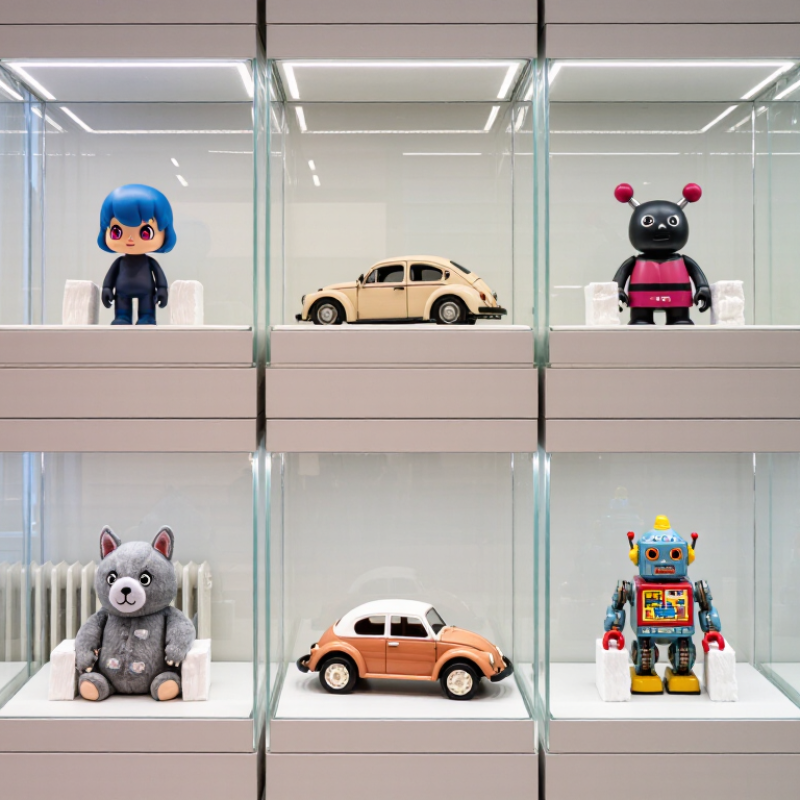
Long-term preservation begins with identifying what each custom toy is made from. Vinyl and PVC may soften or release oils in warm, sealed spaces. Resin can become brittle, especially under direct sunlight or fluctuating temperatures. Painted surfaces need extra care because friction may cause tiny chips. Wood responds to humidity and can crack when the air becomes too dry. Check every surface closely.
Do not store every toy in the same way. Soft fabric parts should remain clean and fully dry before packing. Metal accessories need protection from moisture, while rubber components should not press against painted areas for years. Remove batteries from electronic toys before storage, and record their original position with clear photographs. Small details matter. Acid-free tissue, a rigid box, and a loose protective wrap can reduce pressure and dust without trapping moisture.
Aim for a stable, moderate environment rather than extreme dryness. A dark cabinet away from heaters, windows, and damp walls usually works well. Inspect stored toys every few months for odor, stickiness, fading, or movement in joints. I once overlooked a slight tacky feeling on a rubber part; later, it marked the nearby paint. That mistake showed me that storage plans need revision. Materials change, and preservation is never completely automatic.
Assess each custom toy’s materials and preservation needs
The chart uses a practical 1–5 preservation-priority scale, where 5 indicates greater sensitivity and a stronger need for controlled storage. Paper, textiles, and resin generally require more protection from light, moisture, dust, and handling, while ABS plastic is typically more stable under moderate indoor conditions. Store all materials in a cool, dry, dark environment using acid-free packaging and avoid direct contact between dissimilar materials.
Long-term toy preservation begins with careful cleaning, not the storage box. Remove dust with a soft brush or clean microfiber cloth. For washable surfaces, use lukewarm water and a small amount of mild soap. Avoid soaking painted details, electronic parts, or glued joints. Strong cleaners can fade color and weaken finishes. I once rushed this step and trapped dust beneath a protective coating. That mistake was difficult to reverse.
Dry every part completely before packing. Pat the toy gently, then leave it in a shaded, well-ventilated room. Check seams, cavities, movable joints, and fabric layers, where moisture often remains unseen. Never rely only on a dry surface. A cool fan can improve airflow, but direct heat may warp resin, soften vinyl, or damage paint. It is easy to overdo drying. Give delicate pieces extra time. Before storage, touch hidden areas and inspect them under bright light. Any coolness, damp smell, or clouding means the toy needs more air.
Wrap clean toys in acid-free tissue or unbleached cotton, and use a sturdy container with room around each piece. Do not seal damp items in airtight plastic. Moisture can encourage mold and corrosion. Add a desiccant packet nearby, never directly against the toy, and replace it when saturated. Store the container away from sunlight, heaters, windows, and changing temperatures. Check the collection every few months. Preservation is not completely hands-off.
| Storage Factor | Recommended Practice | Why It Matters | Suggested Check | Priority |
|---|---|---|---|---|
| Cleaning | Remove dust, dirt, oils, and residue using a soft, lint-free cloth. Use a mild solution only when the toy’s material and finish can safely tolerate moisture. | Surface residue can attract insects, hold moisture, and cause staining or deterioration during storage. | Inspect seams, joints, textured areas, and hard-to-reach surfaces before packing. | Essential |
| Complete Drying | Allow the toy to air-dry completely in a shaded, well-ventilated area before wrapping or boxing it. | Trapped moisture can encourage mold growth, corrosion, odor, and adhesive failure. | Check crevices, fabric layers, hollow sections, and internal compartments. | Essential |
| Material Separation | Store metal, paper, fabric, wood, rubber, and plastic components separately when practical. | Different materials react differently to humidity, pressure, light, and chemical contact. | Use individual wraps or compartments for mixed-material custom toys. | Recommended |
| Protective Wrapping | Use acid-free tissue paper, clean polyethylene bags, or inert archival sleeves. Avoid direct contact with newspaper, dyed paper, or PVC film. | Suitable protective materials reduce abrasion, discoloration, dust, and chemical transfer. | Replace damaged, brittle, stained, or dusty wrapping materials. | Recommended |
| Container Choice | Choose a clean, rigid, lidded container that is large enough to prevent crushing and allows limited air circulation. | Rigid storage reduces impact and compression while helping protect against dust and pests. | Confirm that the container has no strong odor, residue, rust, or sharp interior edges. | Recommended |
| Humidity Control | Keep the storage area stable and moderately dry, ideally around 40–50% relative humidity when feasible. | High humidity increases the risk of mold and corrosion; very dry conditions may increase brittleness in some materials. | Use a digital hygrometer and investigate repeated readings above 60% relative humidity. | Essential |
| Temperature Stability | Store toys in a cool, stable indoor environment away from heaters, radiators, attics, garages, and exterior walls with large temperature swings. | Heat accelerates aging and can soften, warp, or deform some plastics, adhesives, and coatings. | Avoid prolonged exposure to temperatures above approximately 27°C (80°F). | Essential |
| Light Exposure | Keep toys in darkness or low, indirect light, preferably inside opaque or light-blocking storage. | Ultraviolet and visible light can fade pigments and weaken certain plastics, fabrics, and paper components. | Position containers away from windows, skylights, and strong indoor lighting. | Essential |
| Weight and Stacking | Do not place heavy objects on delicate figures, articulated parts, fabric pieces, or thin packaging. | Long-term pressure can cause deformation, stress marks, joint damage, and crushed details. | Place heavier containers on lower shelves and keep fragile toys in single layers when possible. | Recommended |
| Small Components | Store accessories, detachable parts, and documentation in labeled, separate compartments with the main toy. | Organized storage prevents loss, scratching, and accidental mixing of small pieces. | Record the contents and photograph the assembled toy before disassembly. | Recommended |
| Battery Removal | Remove batteries from electronic toys before long-term storage and store batteries separately according to their safety instructions. | Leaking batteries can cause corrosion and permanent damage to electrical contacts and nearby materials. | Inspect battery compartments for leakage or corrosion before packing. | Essential |
| Pest Protection | Keep storage areas clean and avoid storing toys near food, damp materials, or untreated organic debris. | Insects and rodents may damage fabric, paper, wood, foam, and natural-fiber components. | Check for droppings, webbing, holes, shed skins, or unusual odors. | Monitor |
| Inspection Schedule | Inspect stored toys at least every 6–12 months for dust, moisture, pests, corrosion, odor, and material changes. | Early detection allows problems to be corrected before damage spreads or becomes permanent. | Document condition, storage location, and any changes during each inspection. | Recommended |
| Handling Records | Keep an inventory with photographs, materials, assembly notes, cleaning dates, and any known sensitivities. | Accurate records support careful handling, reassembly, maintenance, and future preservation decisions. | Store a digital copy separately from the physical collection. | Recommended |
Long-term toy preservation begins with the container. Choose a rigid, dust-resistant box made from inert plastic or archival board. It should fit the toy without squeezing delicate parts. Too much empty space is also risky. Movement can damage painted surfaces, loose joints, or tiny accessories.
Wrap each custom toy in acid-free, lignin-free tissue paper before placing it inside. Tissue prevents direct contact with packing foam, cardboard, or dyed fabric. Use soft, unprinted paper between painted areas and metal parts. Avoid ordinary newspaper. Its ink and acids may stain surfaces over time. For heavier pieces, add clean polyethylene foam supports, but never force the toy into shape. Leave small air gaps. Airtight containers can trap hidden moisture. That mistake is easy to make.
Store the box in a cool, dark room with stable humidity. Keep it away from windows, heaters, basements, and strong cleaning chemicals. Check the toy every six months for odor, condensation, fading, or sticky surfaces. I once assumed a sealed container offered perfect protection, but a slight humidity problem became worse inside it. Now I inspect the packing materials, not only the toy. Acid-free materials help, but they are not magic. Some fabrics, rubber parts, and unstable paints need separate advice from a trained conservator. Photograph the toy before storage, including fragile details and existing marks. This creates a useful record when its condition changes.
Long-term preservation of custom toys begins with a stable room, not an expensive container. Keep the temperature near 18–24°C and avoid sudden changes. Rapid shifts can stress paint, resin, fabric, and glued joints. A shelf beside a radiator is a poor choice.
I once underestimated seasonal heat; a soft accessory became slightly misshapen. That mistake changed my storage routine.
Aim for moderate humidity, around 40–55%, using a small digital hygrometer to check conditions. High moisture encourages mold and corrosion, while very dry air can make some materials brittle.
Do not seal a toy while it is damp. Use acid-free tissue and breathable inner wrapping, leaving room for air movement.
Inspect joints, painted surfaces, and fabric every few months. A quick record helps reveal slow changes.
Light exposure is often ignored. Store toys away from direct sunlight and strong display lamps. Ultraviolet light can fade colors and weaken certain plastics over time.
Opaque covers or UV-filtering cases can reduce exposure, but they are not magic. Keep food, plants, and cardboard clutter away from the storage area.
These attract insects and dust.
Check for droppings, tiny holes, or unusual odors before pests spread. Avoid spraying chemicals near the toy.
I still revisit my setup, because “dry” and “safe” are not always the same.
Long-term storage begins with regular inspection, not a sealed box forgotten in a closet. Check custom toys every four to six weeks. Look for dust, fading, loose joints, surface cracks, sticky residue, or unusual odors. A small change can reveal moisture, heat damage, or chemical reaction inside the storage space.
Use clean cotton gloves when handling delicate painted surfaces. Record each inspection with the date, condition, and storage location. Take clear photographs of fragile details, especially painted faces, fabric parts, and articulated connections. Keep the record simple. Consistency matters more than perfect paperwork.
I once assumed that a dry-looking cabinet offered enough protection. That assumption was wrong. One toy developed a faint tacky surface after seasonal humidity increased. I moved it to a stable room, added breathable wrapping, and replaced a tight plastic sleeve with acid-free tissue. The damage stopped, but the finish did not fully recover.
Protection should be updated as the toy changes. Replace yellowed tissue, dusty covers, weakened foam, and cracked containers. Do not wrap toys tightly if they contain fabric, wood, or mixed materials. Allow gentle air circulation while blocking direct sunlight. Keep storage away from heaters, windows, and damp floors. Inspect after storms, renovations, or room changes. Small oversights happen. Regular attention reduces their impact.
Remove dust with a soft brush or clean microfiber cloth. Use lukewarm water and mild soap on washable surfaces. Avoid soaking painted details, electronics, or glued joints.
Check seams, cavities, joints, and fabric layers carefully. Touch hidden areas under bright light. Coolness, clouding, or a damp smell means more drying time is needed.
No. Use gentle airflow in a shaded, ventilated room. Direct heat may warp resin, soften flexible materials, or damage paint. Patience works better.
Use acid-free tissue or unbleached cotton. Choose a sturdy container with space around each piece. Crowded storage can cause rubbing and pressure marks.
Only when the toy is completely dry. Dampness trapped inside may encourage mold and corrosion. I once rushed this step and regretted it.
Keep the room near 18–24°C, with few sudden changes. Aim for 40–55% humidity. A small digital hygrometer makes conditions easier to track.
Keep it away from sunlight, heaters, windows, and changing temperatures. A shelf beside a radiator is a poor choice. Soft accessories may slowly change shape.
Check them every few months. Look for fading, brittle areas, mold, unusual odors, tiny holes, or droppings. Keep a short condition record. Perfect routines are difficult.
How to store custom toys for long-term preservation? Start by identifying the materials, finishes, moving parts, and special details of each toy, since fabric, wood, plastic, paint, and mixed materials may require different care. Gently remove dust and surface residue using suitable, non-abrasive methods, then allow every part to dry completely before packing. Any remaining moisture can encourage mold, odors, staining, or material deterioration over time.
Place each toy in a clean, sturdy, protective container with acid-free tissue or other neutral packing materials that prevent scratches and reduce pressure on delicate features. Store the containers in a cool, dry, and stable environment away from direct sunlight, heat sources, fluctuating humidity, and pests. Avoid overcrowding and provide support for fragile parts so they are not bent or crushed. Inspect the collection periodically for dust, moisture, discoloration, odors, or damage, and replace worn packing materials or adjust storage conditions when necessary. Consistent monitoring helps preserve both the toy’s appearance and structural condition for many years.

Kasten Toys