 Kasten Toys
7 Best Art Toy vs Regular Toy Differences Explained
What Defines an Art Toy and a Regular Toy?
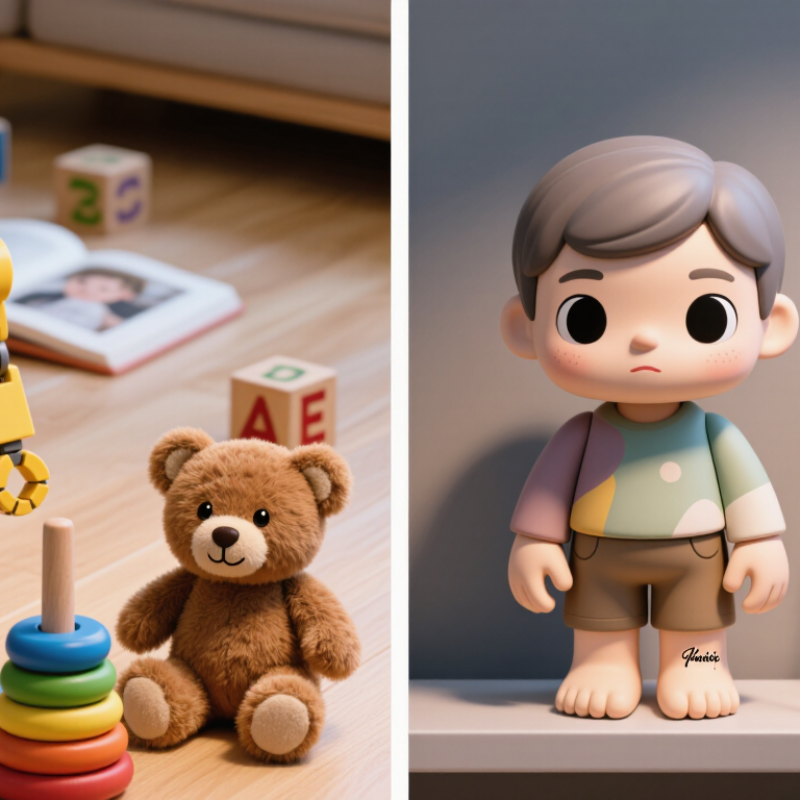
An art toy begins with artistic expression, not only play value. Its sculpt, colors, texture, and packaging often reflect a creator’s personal vision. Many are produced in small batches and designed for display. A regular toy usually prioritizes active play, repetition, learning, or role-play. Its shape must withstand frequent handling, drops, and shared use. The difference is not always obvious. Some art toys invite play, while some regular toys become valuable display pieces.
Market data supports this changing boundary. Circana reported that adult consumers spent about $6.7 billion on toys in the United States during 2023. Adults represented roughly 17% of total toy sales, showing that toys increasingly serve collectors and design-focused buyers. Grand View Research valued the global collectible toys market at approximately $10.7 billion in 2023. These figures suggest that visual appeal and emotional attachment now influence toy purchasing decisions.
Material choices also reveal the difference. An art toy may use resin, vinyl, or hand-finished surfaces, where tiny paint variations feel meaningful. A regular toy commonly uses durable plastic and standardized parts for safer, repeated use. However, this comparison needs caution. “Art toy” has no universal legal definition, and limited production alone proves little. I have seen simple toys described as art pieces, sometimes too generously. The strongest distinction is usually the maker’s intent, the object’s function, and the collector’s experience.
